Building One Strategy, One Leadership Team: Saint-Gobain’s Alignment Journey
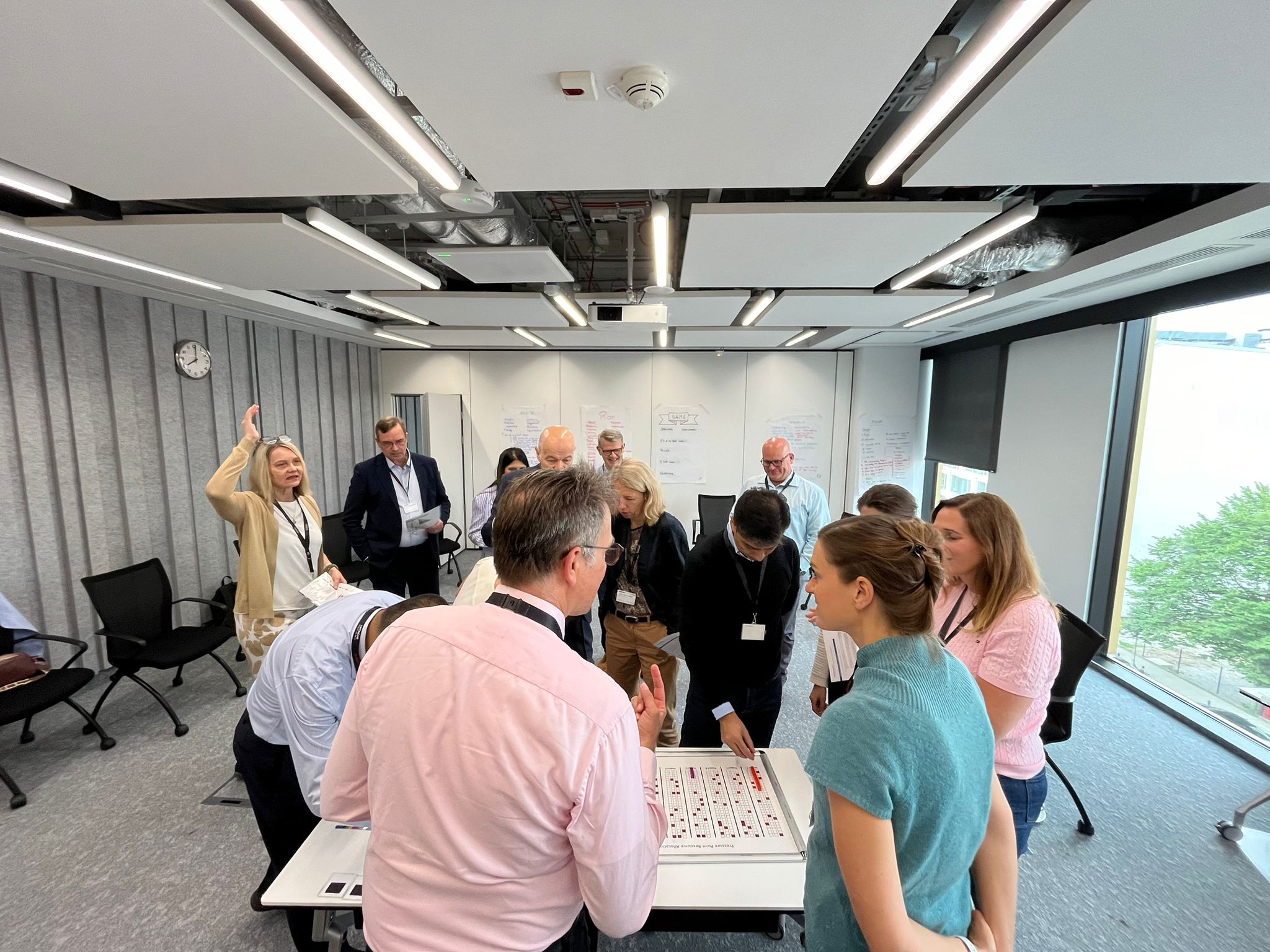
When Saint-Gobain’s Business Unit Window Glass Europe, took over leadership of the business unit, the organization stood at a crossroads. Operations spanned multiple European markets, but priorities differed across countries and leadership teams. The business lacked a clear strategic direction and a shared understanding of where to go next. The ambition was not only to define a strategy, but to create a common direction that connected executive intent with local execution. Stucki Leadership and Team Development supported the development of the strategy and its anchoring across the organization.
Challenge

The business unit operated without a unified strategic framework to guide decisions across markets and functions. Cultural differences and local priorities often outweighed collective goals. The leadership team consisted of strong individuals, but not yet a cohesive team aligned around a shared direction.

Three factors increased the complexity:

  • Different leadership approaches and decentralized decision-making across countries

  • A gap between executive strategy and operational reality

  • The Covid period, which increased distance between teams and risked further fragmentation

The challenge extended beyond strategy design. Leaders at all levels needed to understand the direction, translate it into action, and take ownership for implementation.

Key Elements

The business case centered on creating clarity, alignment, and leadership cohesion as the foundation for execution. Stucki worked closely with the CEO and the executive team to develop a clear and actionable strategy while strengthening the executive team’s ability to lead as one.

The approach focused on the human side of strategy execution. Strategy succeeds only when people understand it and feel responsible for it.

Stucki structured the engagement around two parallel tracks:

  • Strategic design, supporting the executive board in defining a clear direction and priorities

  • Leadership cohesion, strengthening alignment and trust within the executive team

The process combined clear top-down direction with strong bottom-up involvement. Language, formats, and engagement methods were adapted to different leadership levels. Structured seminars and leadership formats helped translate strategy into practical priorities for N-1, N-2, and middle management. This allowed leaders across the organization to connect strategic intent with operational reality and turn strategy into a shared framework for decision-making.

Goals
  • Develop a clear and shared strategy together with the executive board

  • Build a strong and aligned executive team capable of leading the transformation

  • Engage N-1, N-2, and middle management levels to ensure continuity in rollout and execution

  • Translate the strategy into language and priorities understood across all levels of the organization

  • Combine top-down direction with bottom-up engagement to create strong commitment and ownership throughout the business unit

Reto Cometta

CEO, Business Unit Window Glass Europe

Strategy itself isn’t difficult - the real challenge is implementation and securing alignment across the entire organization. Stucki created the space and platform to bring people together through workshops and to roll the strategy out across all levels. You can have a recipe book, but without the chef, it won’t work in the kitchen. Stucki acted as that chef, helping us translate strategy into practice. They helped secure responsibility and empowerment so that every employee, in every corner of the organization, could understand and explain the strategy. For many employees, it was the first seminar they had attended. It gave them a voice and created pride, trust, and understanding - resulting in strong motivation, collaboration across the organization, and the breaking down of silos and hierarchies.

Bernard Reber Stucki CEO

Bernard Reber

CEO & Owner, Stucki Leadership & Team Development

Other Case Stories

Bosch Finance Transformation with Stucki Method

Challenge: The goal was to help the financial organization transition from a local structure to a centralized one.
Key Elements: To achieve this, we needed to design a program that would effectively guide people through this major change, while minimizing disruptions as much as possible.

ABB’s Leadership Transformation: Preparing for a Changing World

Challenge: The aim was to equip the top 200 leaders worldwide to prepare for dramatic changes in the market.
Key Elements: As they were being confronted with unknown and unexpected situations, the goal was to help them navigate uncertainty and ultimately create higher value.

Change Management

Challenge: All individuals across hierarchy levels needed to recognize both the necessity and the purpose of the reorganization, and at the same time, find their way in their new roles.
Key Elements: To achieve this, it was essential to involve divisional management and ensure consistent communication and support throughout the transition.